
Supporting the Supporters: What Every Caregiver and Family Member of an Amputee Should Know
By Bob Manfredi, CPO/LPO | Manfredi O&P — Serving Monmouth & Ocean County, NJ since 1958
📞 Questions about supporting an amputee?
Call (732) 380-0366 — the conversation is always free.
When someone loses a limb, the whole family goes through it with them. The surgeries, the appointments, the first steps on a prosthesis — those belong to the amputee. But the worry, the role changes, the 2 a.m. thoughts about the future? Those often land hardest on the husband, wife, parent, adult child, or close friend standing beside them.
At Manfredi O&P, we’ve cared for amputees in Monmouth and Ocean Counties since 1958, and here’s something we’ve learned in almost seven decades: the patients who do best almost always have a supporter who is doing okay themselves. So this one isn’t for the amputees. It’s for the people who love them.
Caregiver burnout is real — and it doesn’t mean you’re failing
If you’re supporting an amputee and you feel exhausted, anxious, or even resentful some days — you are not failing. You’re normal. What you’re feeling has a name: caregiver burnout, and it is one of the most common and least discussed parts of limb loss recovery.
Research on family caregivers consistently shows that roughly one in three experiences significant depression or anxiety, and nearly half report meaningful caregiver burden and burnout. That mirrors what amputees themselves face: studies estimate about one-third of people with limb loss experience clinically significant depression, with distress typically staying elevated for up to two years after amputation before it eases.
Read that again: the caregiver’s numbers and the amputee’s numbers are almost the same.
Two people are recovering — only one of them gets a care team.
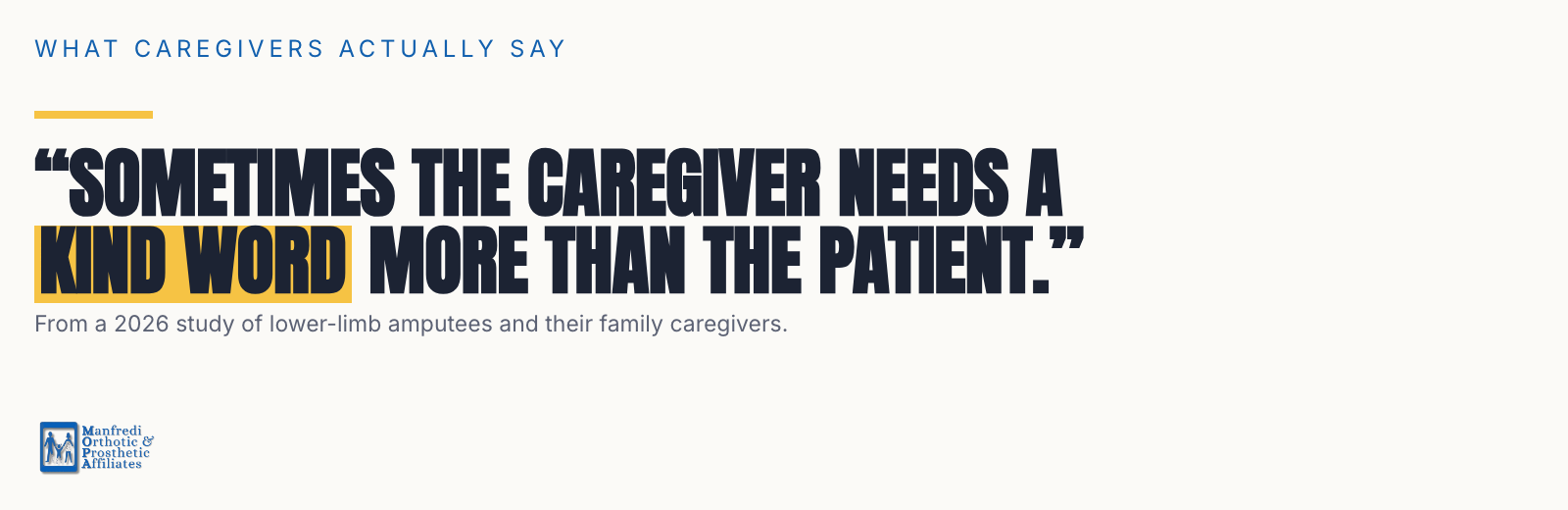
A recent study of amputees and their family caregivers found that caregivers most often described anxiety, emotional exhaustion, lost routines, and social isolation. One caregiver put it in a single sentence: “Sometimes the caregiver needs a kind word more than the patient.”
Why communication gets so hard after limb loss
Limb loss changes the jobs people have in a relationship. A spouse becomes a nurse. A daughter becomes a driver. A best friend doesn’t know if they’re allowed to joke anymore. Everyone is improvising, and most of the friction comes from two well-meaning mistakes:
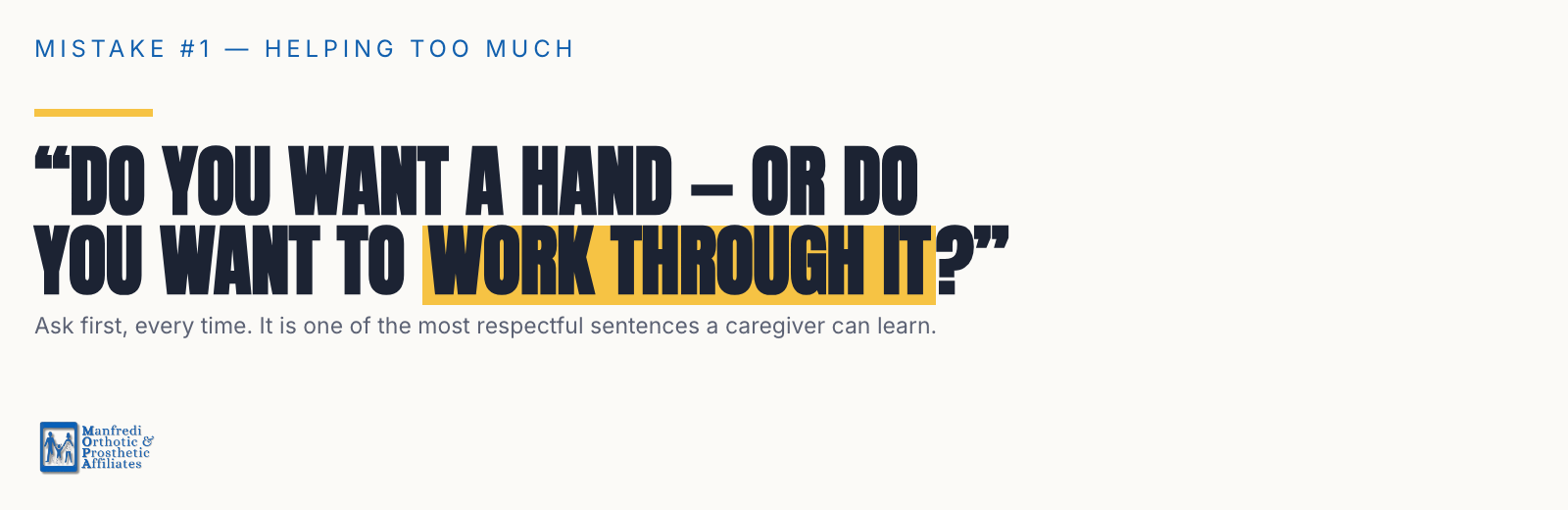
Mistake #1: Helping too much. Loss of independence is one of the hardest parts of limb loss. When family jumps in to do everything, it can quietly send the message “you can’t.” Rehabilitation experts recommend a flexible approach instead: step in when your loved one genuinely needs it, and deliberately step back as they regain ability. Ask first. “Do you want a hand with that, or do you want to work through it?” is one of the most respectful sentences a caregiver can learn.
Mistake #2: Relentless positivity. “Stay positive!” “At least you’re alive!” “You’ve got this!” The limb-loss community has a name for this — toxic positivity — and amputees describe it as one of the loneliest things a family can do. Grief after limb loss is normal and healthy. Two things can be true at once: your loved one can be grateful to be alive and heartbroken about what they lost. When you allow the sad conversation instead of redirecting it, you become the safest person in their life.
Five ways to communicate better, starting today
Ask before helping. Every time. It preserves their dignity and saves you from doing more than you need to.
Let bad days be bad days. You don’t have to fix the feeling. “That sounds really hard. I’m here” beats a pep talk almost every time.
Check in on the person, not just the patient. Ask about things that have nothing to do with the leg. They’re still them.
Go to appointments together — as a teammate, not a spokesperson. Caregivers who are included in prosthetic fittings and therapy understand the process better and carry less anxiety. (At Manfredi, family is always welcome in the fitting room.)
Say the honest thing about yourself, too. “I’m tired today” is not a betrayal. Couples and families who talk openly about both people’s fears consistently report stronger relationships after limb loss — some even say the relationship deepened.
Signs of caregiver burnout — and who’s taking care of you?
You cannot pour from an empty cup — and you can’t support anyone well while running on fumes. Caregiver support is not a luxury; it’s part of the patient’s care plan, and treating caregiver burnout is part of treating the amputation. Here’s where to start:
Come to Out on a Limb. Our monthly amputee support group meets the last Thursday of every month at 3:00 PM at our Eatontown office (749 Hope Rd, Suite C). It is not just for amputees — caregivers, family, and friends are part of the circle. This month’s meeting — Thursday, July 30 — is dedicated to exactly this topic: the caregivers. Call (732) 380-0366 to RSVP.
The Amputee Coalition’s caregiver resources — including a free guide, “Being a Caregiver: Beginning Your New Journey,” and a virtual caregiver-only support group that meets monthly. Their National Limb Loss Resource Center line is 888-267-5669.
Peer support works in both directions. Our Peer Visitor Program connects amputees with someone who has lived it — and the Amputee Coalition also trains caregiver peer visitors, so supporters can talk to someone who has been in their exact chair.
Professional help is a strength move. If the weight isn’t lifting, a counselor who understands disability and grief can help both of you. Ask us — we’re happy to point you in the right direction.
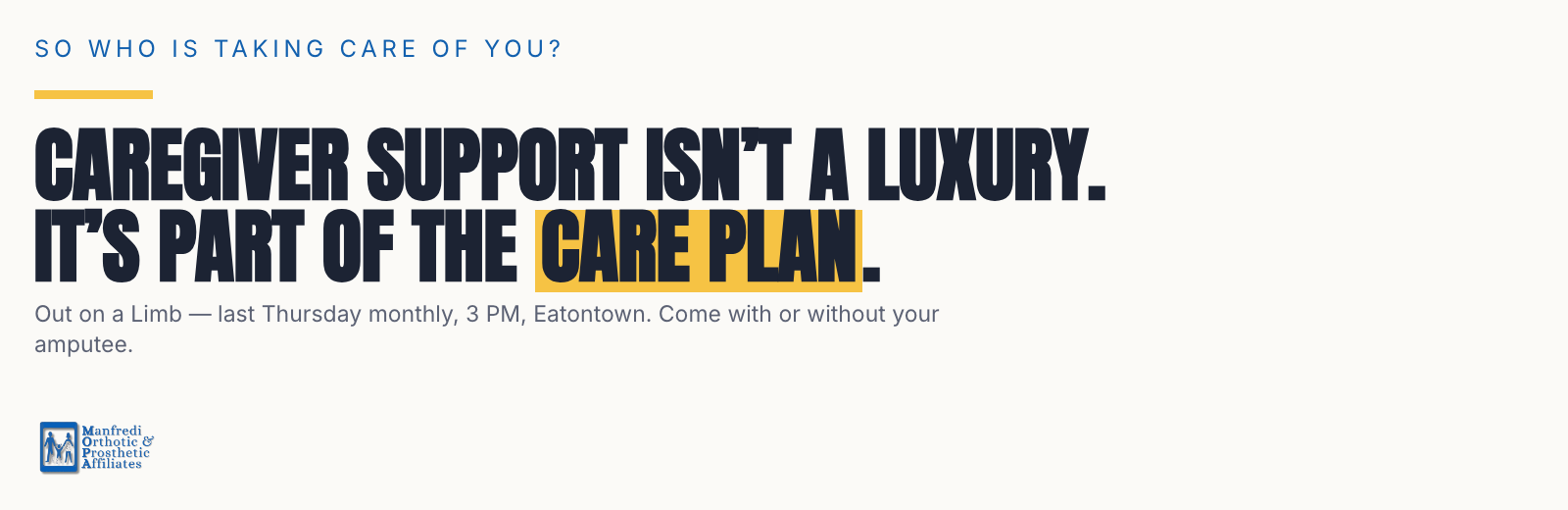
🤝 Caregiver or family member? You’re welcome at Out on a Limb — with or without your amputee. Call (732) 380-0366.
You’re part of the care team. We mean that.
For 67 years, our family has cared for families — because that’s what limb loss actually involves. If you’re supporting someone through amputation and you have questions about their prosthesis, their progress, or just how to help without hovering, call us. That conversation is free, and it always will be.
Join us for Out on a Limb — Thursday, July 30 at 3:00 PM, Eatontown. This month is about the caregivers.
Manfredi O&P — Care Beyond Device Delivery | Serving Monmouth & Ocean Counties, NJ since 1958
Eatontown: 749 Hope Rd, Suite C | Toms River: 201 Hooper Ave, Suite 6 | (732) 380-0366
